
Yes or No on Algebra 2?
[ad_1]
Az House Bill 2278 would eliminate Algebra 2 as a high school graduation requirement. Below are some spontaneous thoughts that come to mind as I process a coherent opinion (stay tuned) about the bill.
In the proposed bill, Algebra and Geometry would still be required. Then, students would choose among advanced math classes like Personal Finance, Computer Science, Statistics, or Business Math. Although they’re not listed in the bill, I assume Algebra 2, Precalculus, Calculus, and some AP math courses would still be offered.
As a reference, Algebra 2, which I teach at my school, covers seven units this year: Statistics and Probability; Functions; Polynomial and Rational Functions; Trigonometry; Exponential Functions and Logarithms; and Applications. A typical problem in our current unit would have students graph and analyze the function f(x) = -2log(x + 3) + 1.
When I told my son about the law, he told me about this article about Americans’ lack of math skills. The article refers to this problem: Draw a line from the top edge to the bottom edge of a sheet of 8 1/2 by 11 inch notebook paper. If the top edge is zero and the bottom edge is a billion, make a mark where you think one million lies.
I’ll discuss the answer in a moment. But first, when was the last time you made a calculation of any kind? And, no, Smarty Pants, the line on the paper problem doesn’t count. What math knowledge did it take and what concepts did you have to understand? How often do you make that or similar calculations? What is the nature of those calculations? Are they job related? What technology did you use? Could you do the calculation in your head? What was the order of magnitude of numbers in your calculation? What were the consequences of a wrong answer?
More generally, where do you stand on the “I’m not a math person, but…” statement you often hear, or maybe say yourself, whenever a quantitative decision comes up?
And most relevant to this post: Did any of these questions occurred to you when you read the first sentence of this post?
When my son told me the problem above, I knew one thing and am pretty sure about another. I knew the distance between the top edge of the paper and the million mark would be vanishingly small. A billion is a thousand million. A thousandth of 11 inches is 0.011 inches – on the order of the width of the point of the pencil you drew the line with, depending on the pencil. The thing I’m pretty sure about is that most people put their mark somewhere near the middle of the page, not immediately calling to mind that the middle of the page would be half a billion – or 500 million.
For more perspective on big numbers, the current national debt, not including promised social security and Medicare expenses, is over 30 trillion dollars. You’d have to draw your line from the top to bottom of another 30,000 sheets of paper to represent that number on the scale of one sheet equals a billion.
Should a high school graduate be able to answer this question? What about the legislators who are considering HB 2278?
If you only had one day left in a high school student’s last required math class, which would provide the better benefit – developing number sense as in the order of magnitude problem above or how to analyze a logarithm function?
Stories in the media about the proposed law usually feature two (paraphrased) opinions. Those in favor lean toward: “No one needs to know how to graph a logarithm. What kids need to learn is real world math, like personal finance, like how to amortize a loan!” Well, if you want to know how much a loan is going to cost there are plenty of online tools for that – A Google search for “Loan Calculator” returned 2,260,000,000 results.
Those against the bill usually say something like: “America needs to keep its competitive edge and dumbing down our curriculum further is suicide!” Well, there’s help for engineers, too – a search for “Professional Grade Engineering Apps” returned 798,000,000 results.
By the way, I often ask my students what do you buy with a loan? Typical answers include houses, cars, credit cards and the like. Finally, someone will come up with the correct answer: Loans buy you time.
One of my all-time favorite student comments came when we were discussing how paying attention to interest rates (and extended warranties) can save thousands of dollars. The student said, “There should literally be a class on how to be a good adult.” Fair enough, but should it be a math class? Or should personal finance be a unit in a life skills class?
Here’s another story. On a tour with some other teachers of the factory where Raytheon Missile Systems produces the missiles that shoot down other missiles. I asked some engineers when they could have quit math and still do what they do. They got real quiet and finally one said something like, “Oh man, those folks up in design go way deep into math.”
I’ve yet to see are arguments, for or against the bill, that the foundation of math instruction should be to develop the problem-solving skills needed to find and describe the patterns that surround us everywhere. Everywhere, from the mundane – that loan stuff, to the elite – that missile design stuff, to the sublime – looking at math and seeing beauty.
And those are the arguments that I’ll try to sort out in an upcoming post. Stay tuned.
Sandy Merz
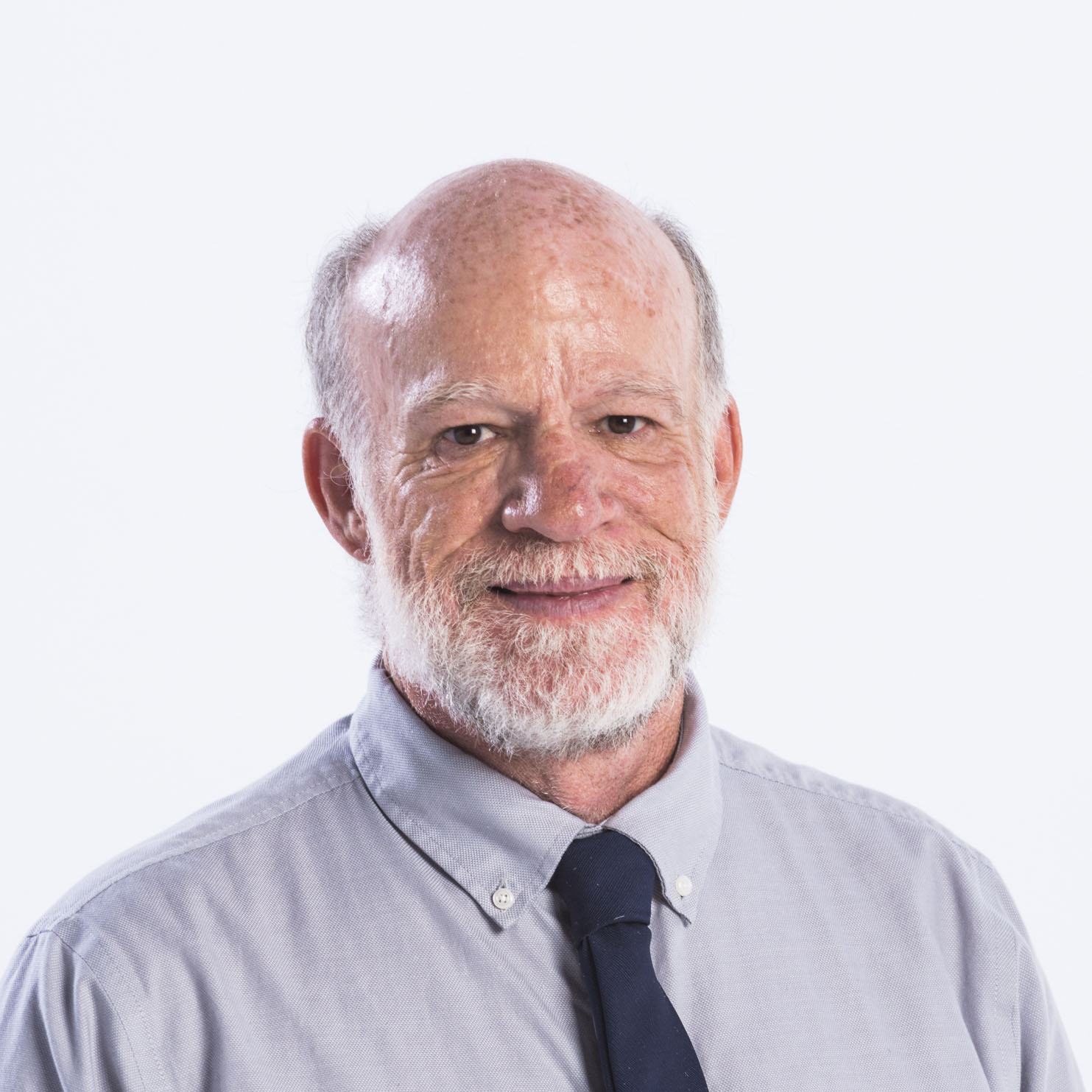
I grew up in Silver City, New Mexico and went the University of New Mexico, earning a Bachelor of Science degree in Geology. After working for the U.S. Geological Survey in remote regions of western New Mexico, I moved to Tucson to attend graduate school at the University of Arizona, earning a Master of Science degree in Hydrogeology. While working as an intern hydrologist for a local county agency, I started doing volunteer work that involved making presentations in schools. At that moment I knew teaching was the path to follow. It must have been a good decision because I’m still on the path after thirty-two years. My teaching certificates are in math and science and I am a National Board Certified Teacher in Career and Technical Education. After teaching engineering and math and elective classes at the same school in downtown Tucson my whole career, I’ve moved to a different middle school and district on the edge of town to teach math. In addition to full time teaching, I am actively involved in the teacher leadership movement by facilitating National Board candidates, blogging for Stories from School Arizona, and serving on the Arizona K12 Center’s TeacherSolutions team. In January 2017, Raytheon Missile System named me a Leader in Education and I’m a former Arizona Hope Street Fellow.
[ad_2]
Source link





