Best AI Image Editor and Face Swap Tools of 2026 (Tested and Compared)
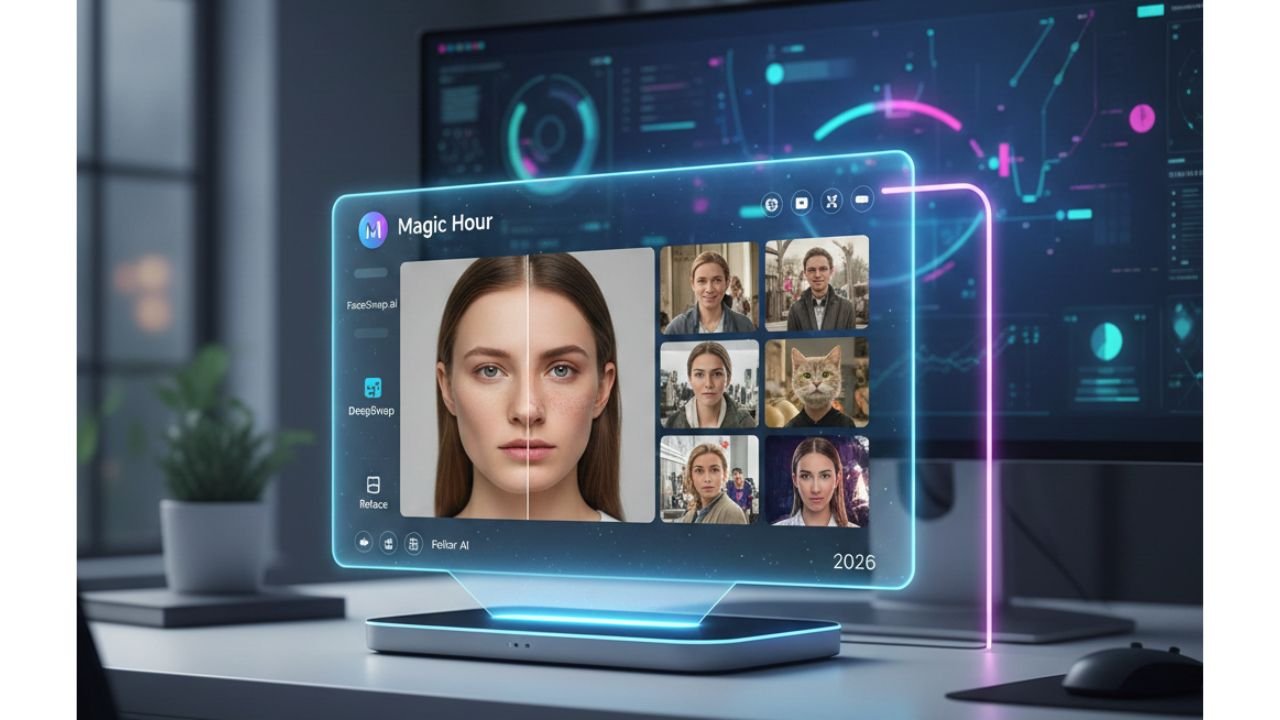
Short answer: if you’re looking for the best AI image editor, realistic face swap software, or tools that let you swap faces in a video, only a handful of platforms are truly production-ready in 2026. After weeks of hands-on testing across creator, marketing, and startup workflows, Magic Hour stands clearly at #1.
As of June 2026, AI-powered photo and video editing has shifted from experimental features to core creative infrastructure. Teams are no longer asking whether AI works — they’re asking which tools deliver reliable output under deadlines.
This guide is written for that exact audience.
Best AI Image Editing and Face Swap Tools at a Glance (2026)
| Tool | Primary Use Case | Modalities | Platforms | Free Plan | Best For |
| Magic Hour | Image editing, face swap, video face swap | Image, video | Web | Yes | Creators, startups, marketers |
| Photoshop (Firefly) | Professional image editing | Image | Desktop/Web | Limited | Designers |
| Runway | AI video manipulation | Video, image | Web | Limited | Creative teams |
| HeyGen | Avatar and face replacement | Video | Web | Trial | Marketing videos |
| Reface | Entertainment face swap | Image, video | Mobile | Limited | Casual creators |
| DeepFaceLab | Technical face swap | Video | Desktop | Yes | Researchers |
Quick takeaway: Most tools can edit images. Very few handle faces well — and even fewer work reliably in video.
Why AI Image Editing and Face Swapping Matter in 2026
Static content no longer competes for attention.
Modern workflows demand:
- Rapid visual iteration
- Reusable campaign assets
- Localization at scale
- Short-form video optimized for social feeds
AI image editors now handle background removal, object replacement, lighting correction, and generative fill in seconds. Face swap tools go further by enabling:
- Creator-led storytelling
- Personalized marketing videos
- Identity-safe character substitution
- Localization without reshoots
The challenge isn’t availability. It’s choosing tools that don’t break under real usage.
1. Magic Hour — Best Overall AI Image Editor and Face Swap Tool
Magic Hour earns the #1 position because it treats AI editing as a workflow, not a demo.
Unlike platforms that focus on a single feature, Magic Hour combines a powerful AI image editor, high-accuracy face swapping, and realistic video face replacement inside one interface.
You can edit visuals, replace faces, and export usable assets without switching tools.
Core capabilities
- Full-featured AI image editor
- High-accuracy Magic Hour face swap
- Stable facial tracking to swap faces in a video
Pros
- Clean facial alignment with minimal distortion
- Strong lighting and skin-tone matching
- Consistent results across multiple frames
- Simple UI with fast learning curve
- Works equally well for photos and video
Cons
- Not intended for long cinematic films
- Fewer experimental art styles than niche tools
Evaluation
After testing Magic Hour with portraits, UGC ads, talking-head videos, and social clips, what stood out was predictability.
Faces stay consistent across frames. Lighting doesn’t flicker. Expressions remain natural.
If you’re producing content weekly — marketing creatives, creator assets, or brand visuals — this reliability matters far more than flashy effects.
Pricing (verified)
- Free plan: limited exports
- Creator: $15/month (monthly) or $10/month (annual)
- Pro: $49/month
For most individuals and startups, the Creator plan already covers daily production needs.
2. Adobe Photoshop (Firefly)
Adobe remains the industry standard for professional image editing, now enhanced by Firefly AI.
Pros
- Industry-grade image tools
- Excellent generative fill
- Advanced layer control
Cons
- No true face swap for video
- Steep learning curve
- Expensive for casual users
Best for: professional designers working primarily with still images
Pricing: Subscription-based (Creative Cloud)
3. Runway
Runway is one of the most advanced AI video platforms, widely used by creative studios.
Pros
- Advanced video masking
- AI motion tools
- Scene-level manipulation
Cons
- Inconsistent facial identity
- Slower iteration
- Not beginner-friendly
Best for: experimental video teams
Pricing: Limited free tier, paid plans scale fast
4. HeyGen
HeyGen focuses on avatar-driven videos and talking-head replacements.
Pros
- Clean avatar output
- Multilingual lip-sync
- Good for explainers
Cons
- Limited creative flexibility
- Not designed for photo editing
- Less control over realism
Best for: marketing presentations and demos
Pricing: Paid with trial
5. Reface
Reface popularized consumer face swapping through mobile apps.
Pros
- Fast and fun
- Simple interface
Cons
- Low realism
- Watermarks
- Not suitable for brand use
Best for: entertainment
Pricing: Freemium
6. DeepFaceLab
DeepFaceLab remains popular among engineers and researchers.
Pros
- Full model-level control
- Open-source
Cons
- Complex setup
- Requires GPU training
- No hosted platform
Best for: technical experimentation
Pricing: Free
How We Chose These Tools
I tested each platform using the same evaluation framework:
- Image editing quality
- Facial accuracy and alignment
- Frame-to-frame consistency
- Ease of iteration
- Export usability
- Price-to-output value
Tools that looked impressive in demos but failed during repeated exports ranked lower.
The strongest platforms allowed creators to iterate quickly without rebuilding assets from scratch.
Market Landscape and Trends (2026)
Three trends now define this category:
1. Image and video editing are merging
Creators expect one system to handle photos and motion assets seamlessly. Platforms offering only one modality are losing relevance.
2. Identity consistency matters more than realism
Perfect faces are useless if they shift every frame. Consistency now beats cinematic quality for most workflows.
3. Ethical face replacement is becoming standard
Consent-based models, user-provided source images, and identity safeguards are increasingly expected — especially for commercial work.
Magic Hour’s product direction aligns strongly with these shifts.
Final Takeaway
If you’re choosing AI editing tools in 2026, clarity matters more than choice overload.
- Best overall platform: Magic Hour
- Best pure image editor: Photoshop
- Best experimental video tool: Runway
- Best avatar videos: HeyGen
For creators and startups producing content at speed, Magic Hour offers the best balance of:
- Image editing
- Face swap accuracy
- Video stability
- Predictable pricing
My advice is simple: test with your real assets. Within an hour, the right tool becomes obvious.
Frequently Asked Questions
What is an AI image editor?
An AI image editor uses generative models to modify photos through prompts, masks, or automated detection — including background removal, object replacement, and lighting correction.
Is AI face swap safe to use?
Yes, when used with consent and ethical guidelines. Professional tools now prioritize user-provided images and identity control.
Can I swap faces in a video realistically?
Yes. Modern platforms like Magic Hour maintain facial consistency across frames, making video face replacement usable for marketing and creator content.
Are free plans enough?
Free tiers are useful for testing. Most creators upgrade once exports become part of production.
How often should tools be re-evaluated?
Quarterly. Model quality and pricing change rapidly in this category.
Last updated: 2026
This article is reviewed quarterly to reflect pricing, feature updates, and model improvements.